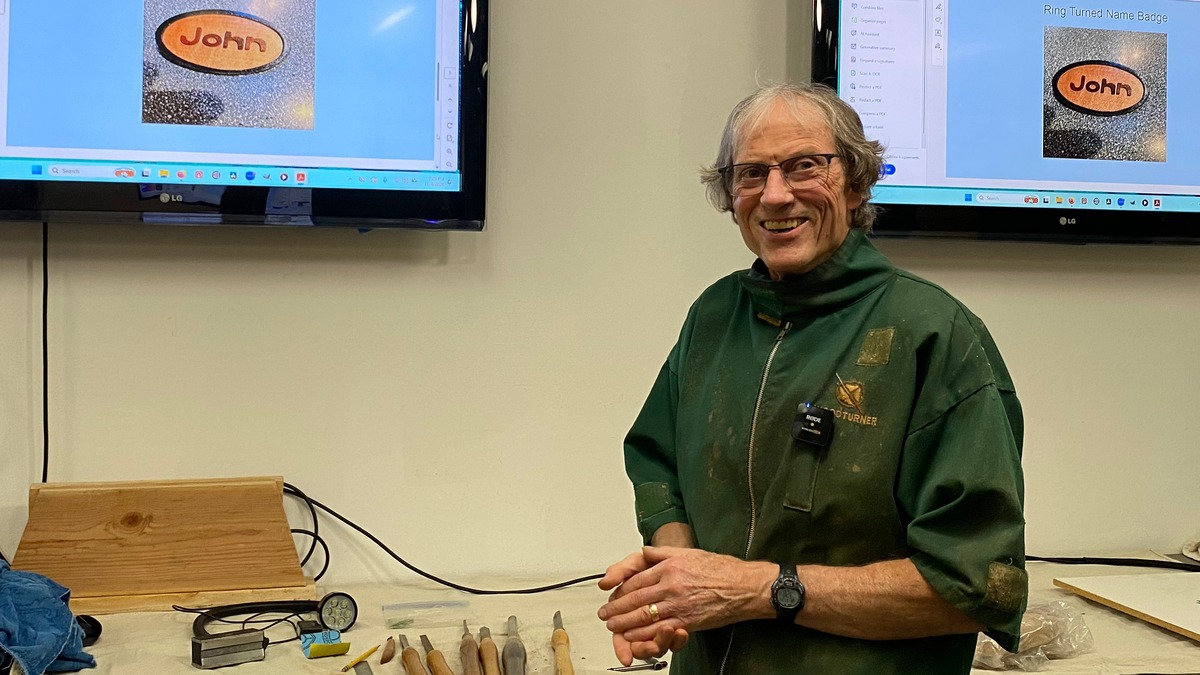
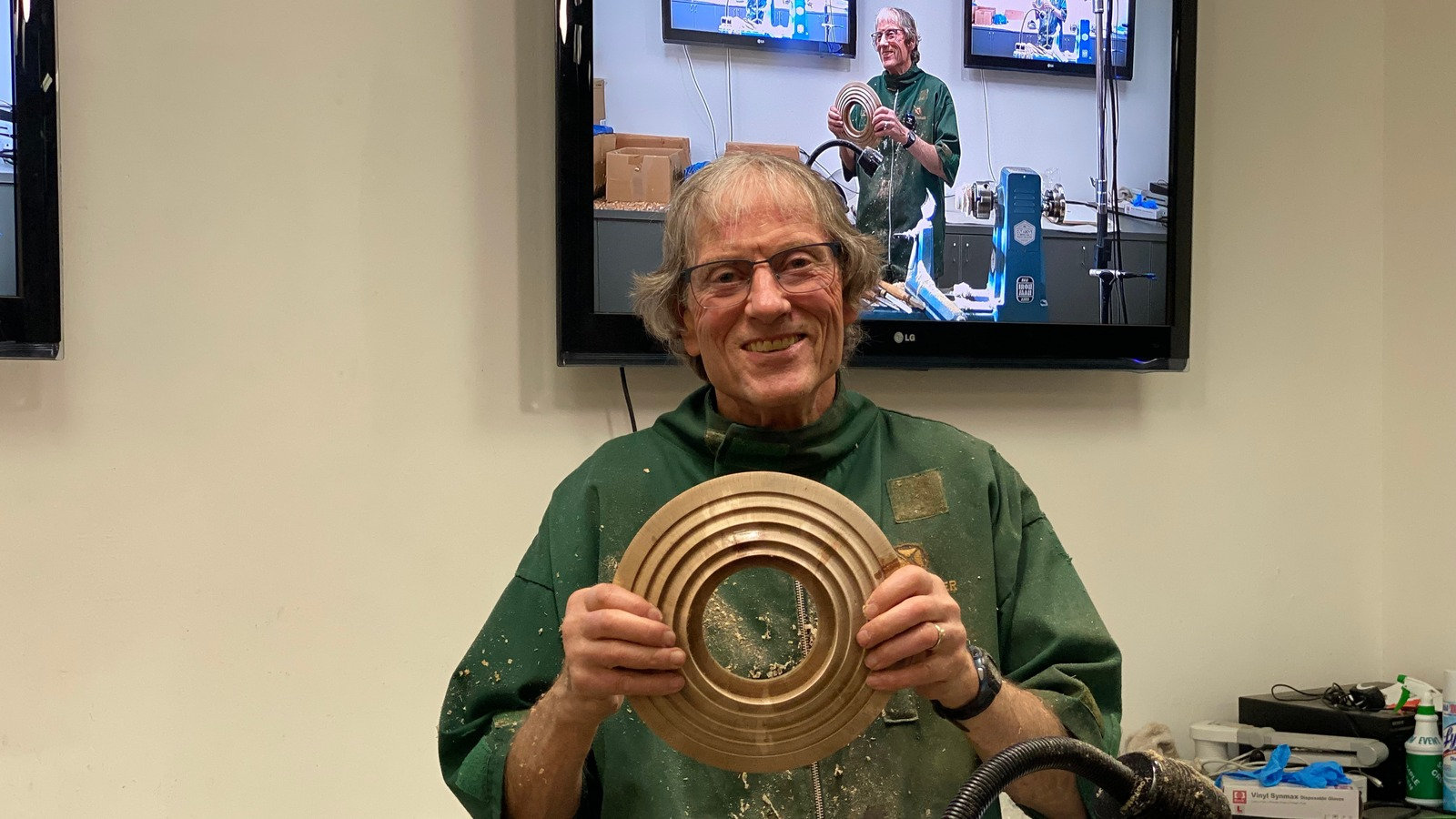
Our member John Wells visited the Silicon Valley Woodturners for a special demonstration at Maker Nexus in Sunnyvale on Wednesday, November 4, 2026. Over 30 turners gathered to watch John transform a simple slice of a log into a pile of charming little Christmas trees.
John is a professional woodturner who now spends much of his time teaching both turning and carving. He is a member of the Santa Cruz Woodturners, where he previously served as president, and he joined the Santa Clara Valley Carvers in September 2026.
What Is German Ring Turning?
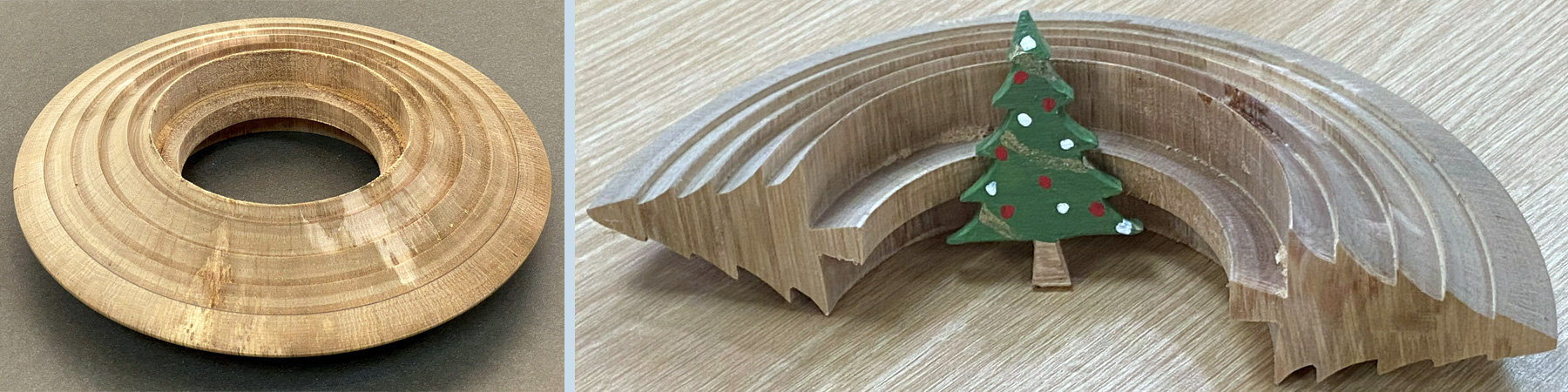
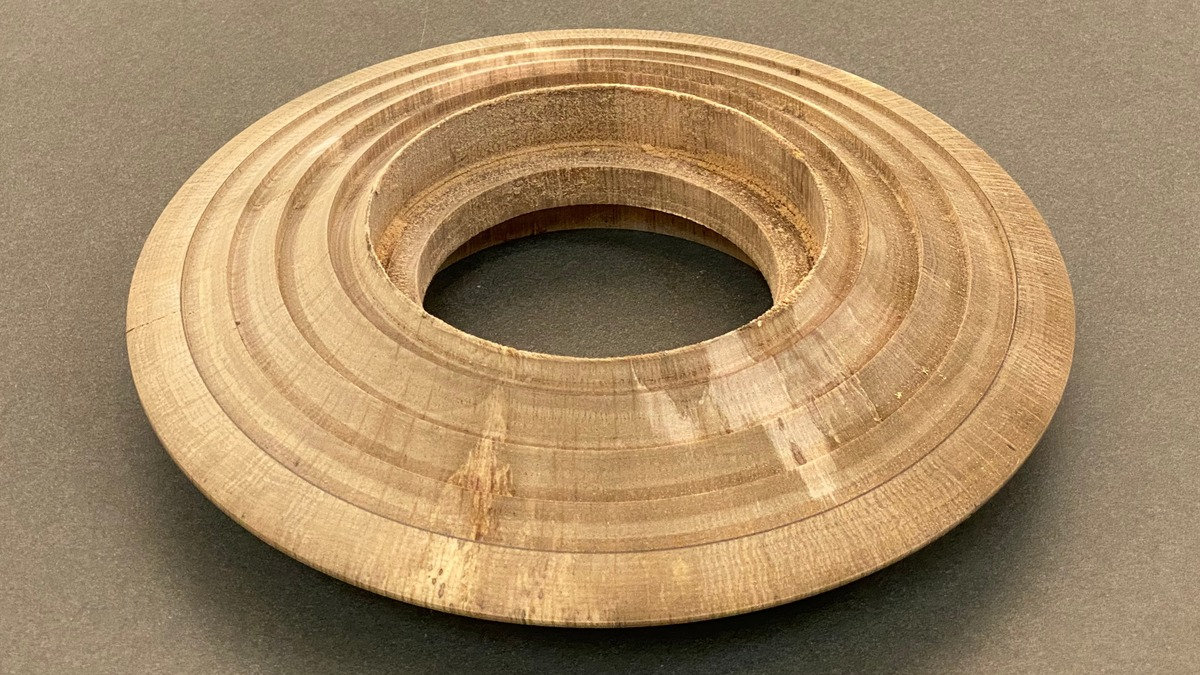
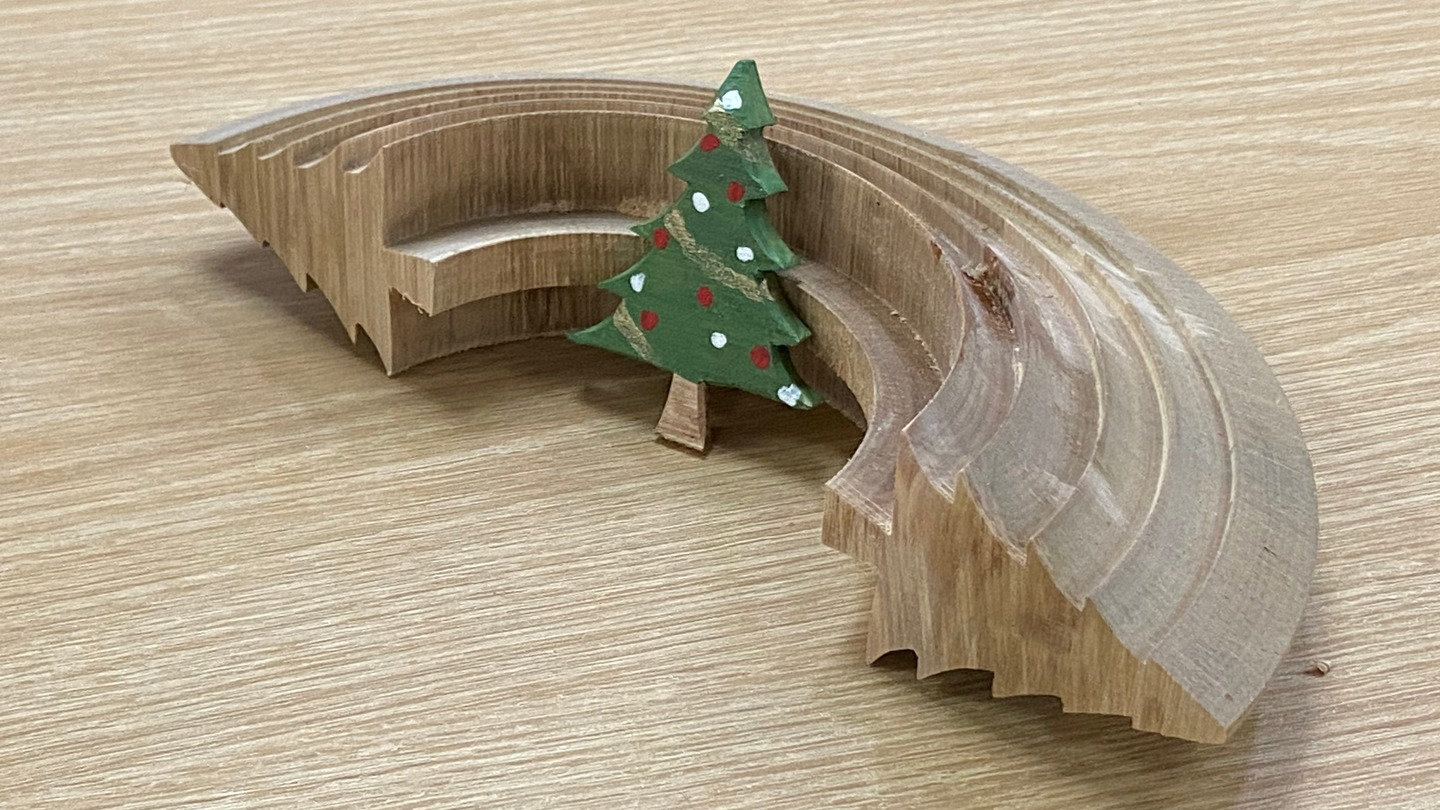
German ring turning, also known as Reifendrehen, is a clever technique for making many identical copies of one figure from a single turned ring. The secret is in the geometry: the cross-section of the ring is turned into the outline of the figure. A bandsaw then slices that ring into many thin pieces, and every single piece is the same figure.
The ring profile can be almost anything: a horse, a bird, a deer, or a tree. If it works as a toy or an ornament, it can be turned this way. This craft emerged around 1800 in the Ore Mountains of Germany, and turners near the town of Seiffen still practice this traditional art today.
For this demo, John chose a fir-tree profile. With the winter holidays approaching, these slices make perfect seasonal ornaments.
A Wet Slice of Tanoak
John turned his ring from a slice of a Tanoak log. Tanoak, also called tanbark, is an indigenous hardwood common in the Santa Cruz Mountains, where John has his woodturning shop. While European turners traditionally used spruce, Tanoak provided a beautiful local alternative.
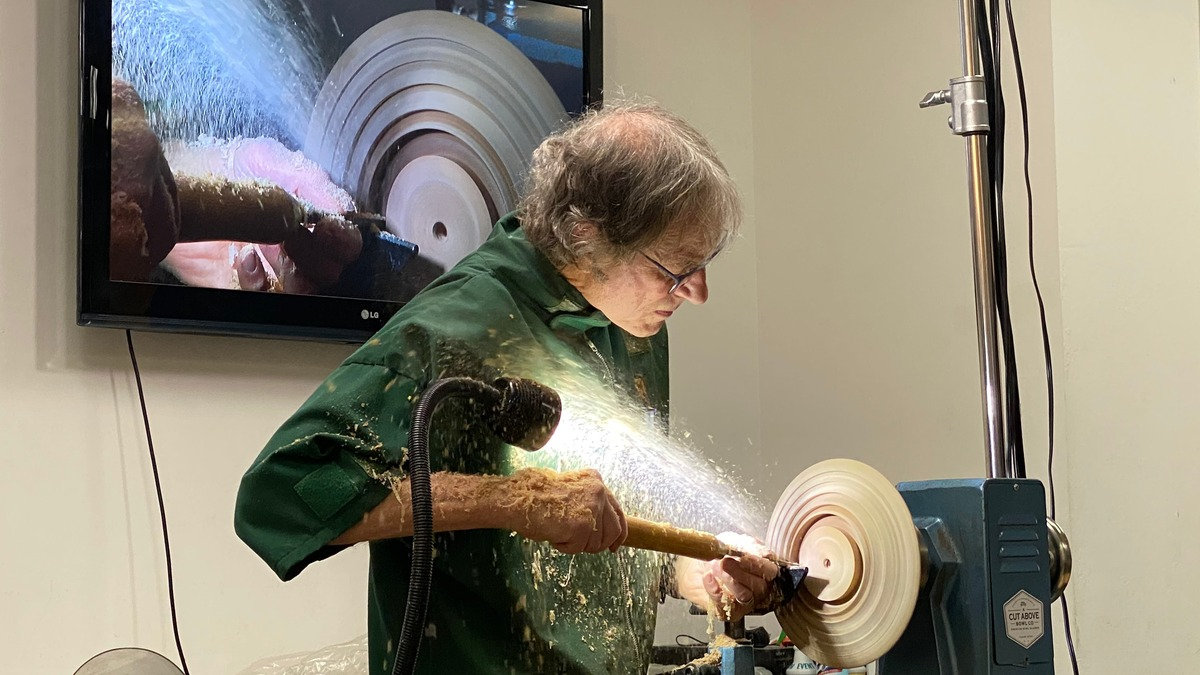
Crucially, the wood was still wet. If a blank like this is left to air-dry for even a few days, it can start to “check,” or develop cracks. These cracks create weak spots that can be dangerous on a spinning lathe, as the centrifugal force could cause the piece to fly apart. To prevent this, John harvested the log just a few days before the demo and kept the slice wrapped in plastic to retain moisture. He cautioned that this is only a short-term fix, as leaving wet wood in plastic for too long can lead to mold.
A Story Stick and Sharp Tools
To save time during the demonstration, John pre-turned one flat face of the ring before the meeting. Because the ring has two flat faces, and each face becomes one side of every figure, the face he turned live at the demo had to match the first one perfectly.
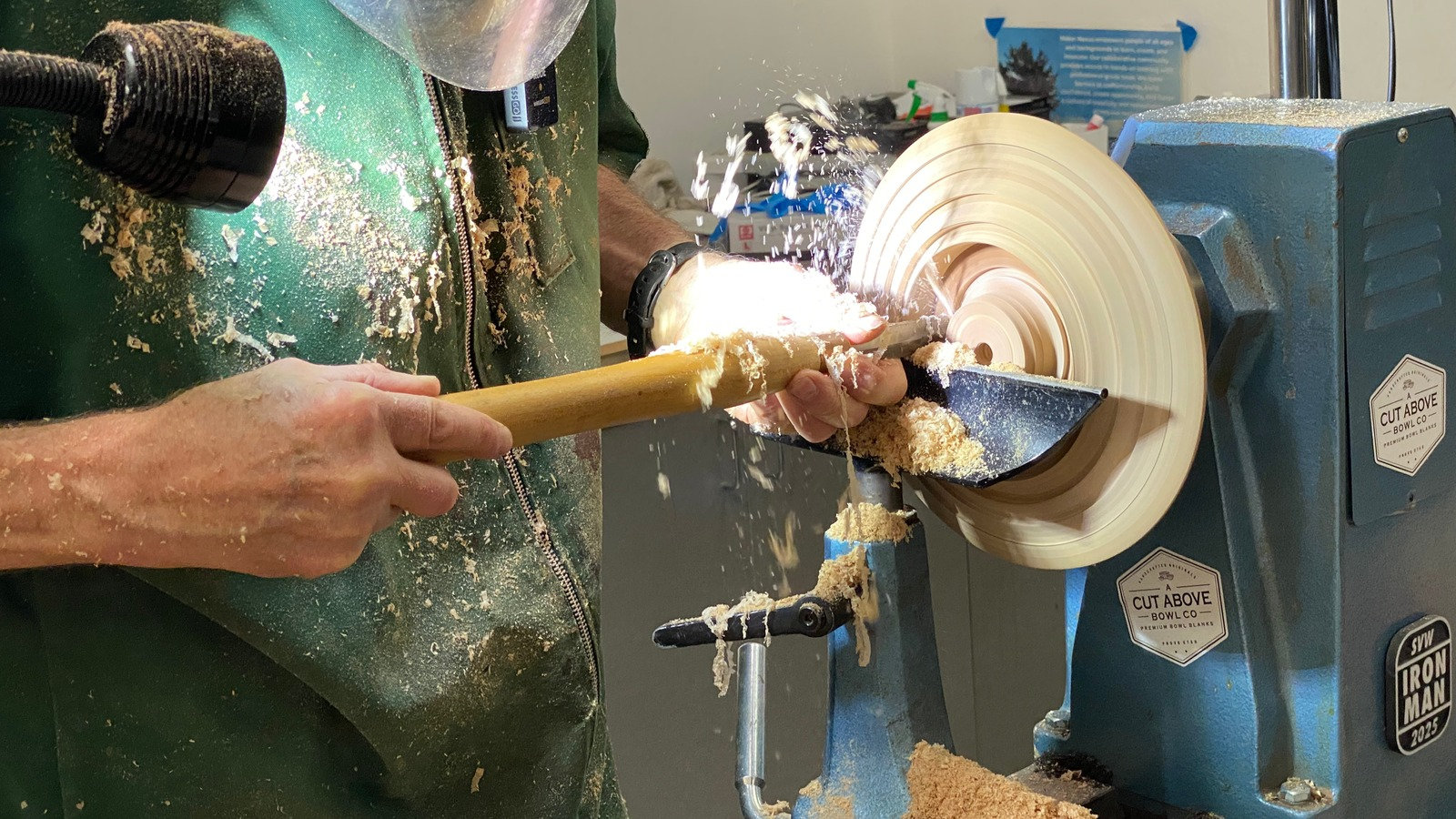
To achieve this, he used a story stick: a piece of wood with markings that record a specific profile or set of dimensions. Much like a carving pattern, a story stick allows a maker to duplicate a project exactly, even years later.
Interestingly, John used no sandpaper for this project. Thanks to a lifetime of experience and very sharp tools, the surface came off the lathe in excellent condition. Since all pieces are cut on a bandsaw, they can be sanded individually if desired. However, for a Christmas tree, the rough, unsanded texture actually looks more natural.
Questions, Cameras, and Zoom
The demonstration was a hit, with many attendees asking questions that John was happy to answer. To ensure everyone could see fine details, monitors were placed around the room to show close-up video feeds.
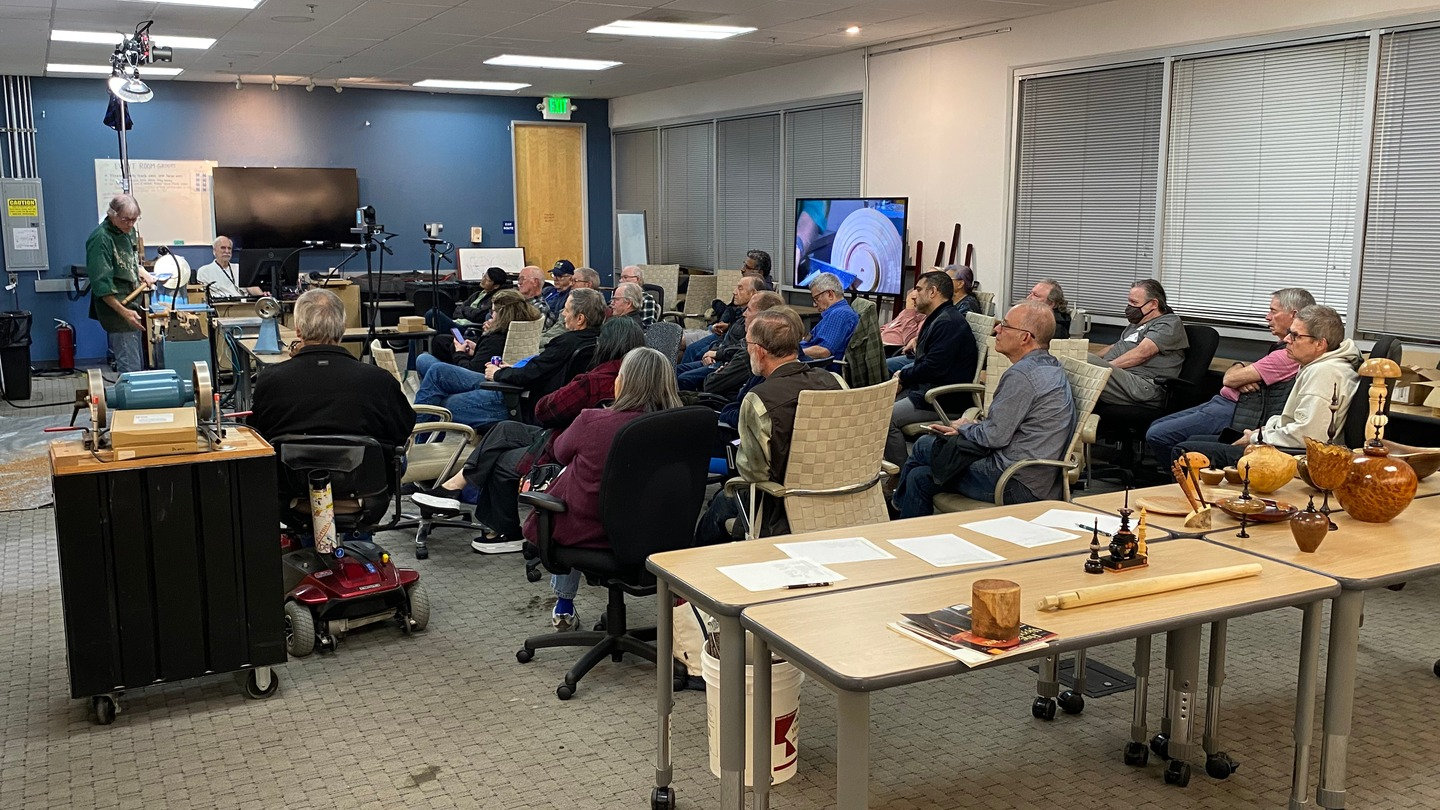
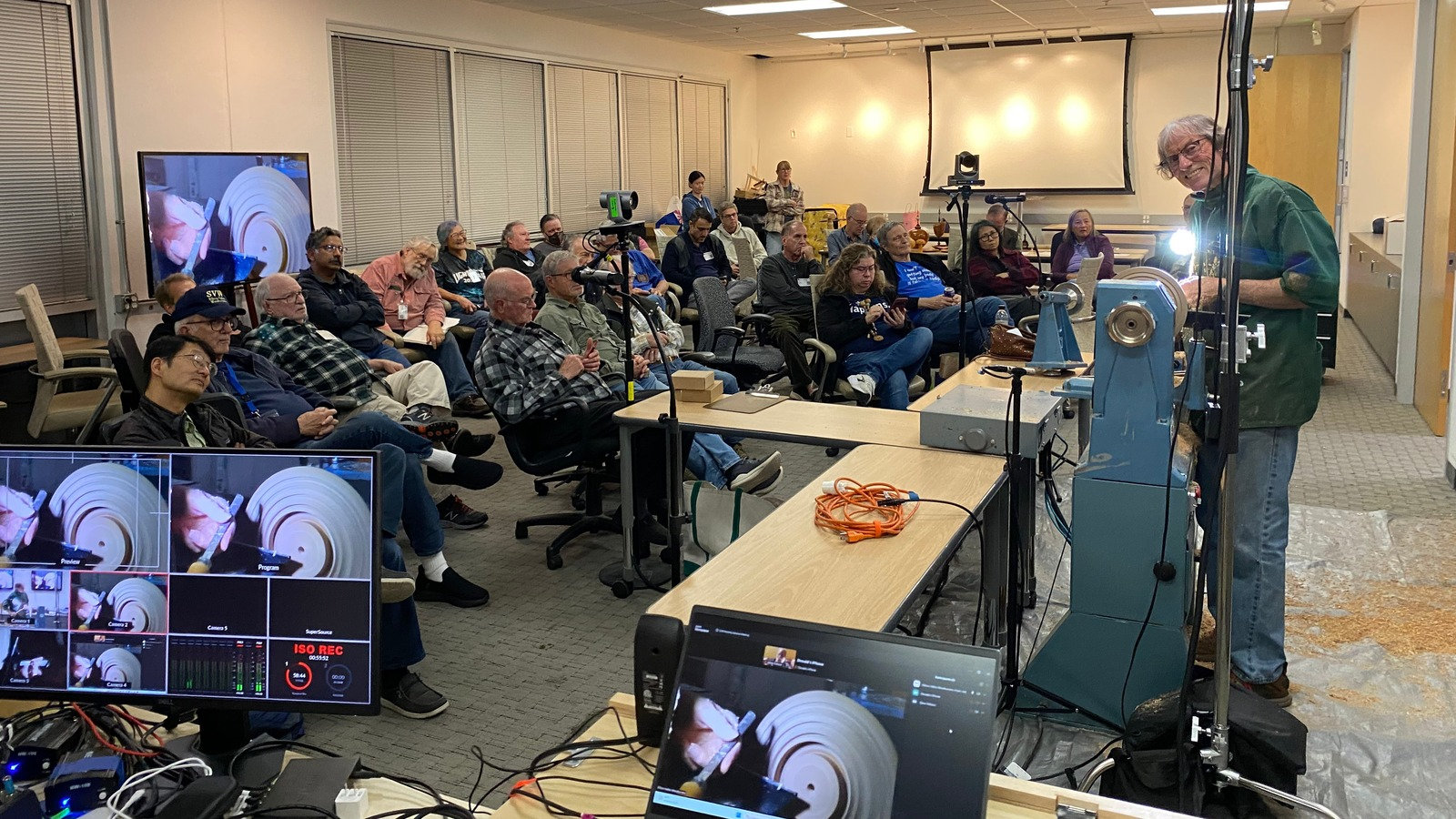
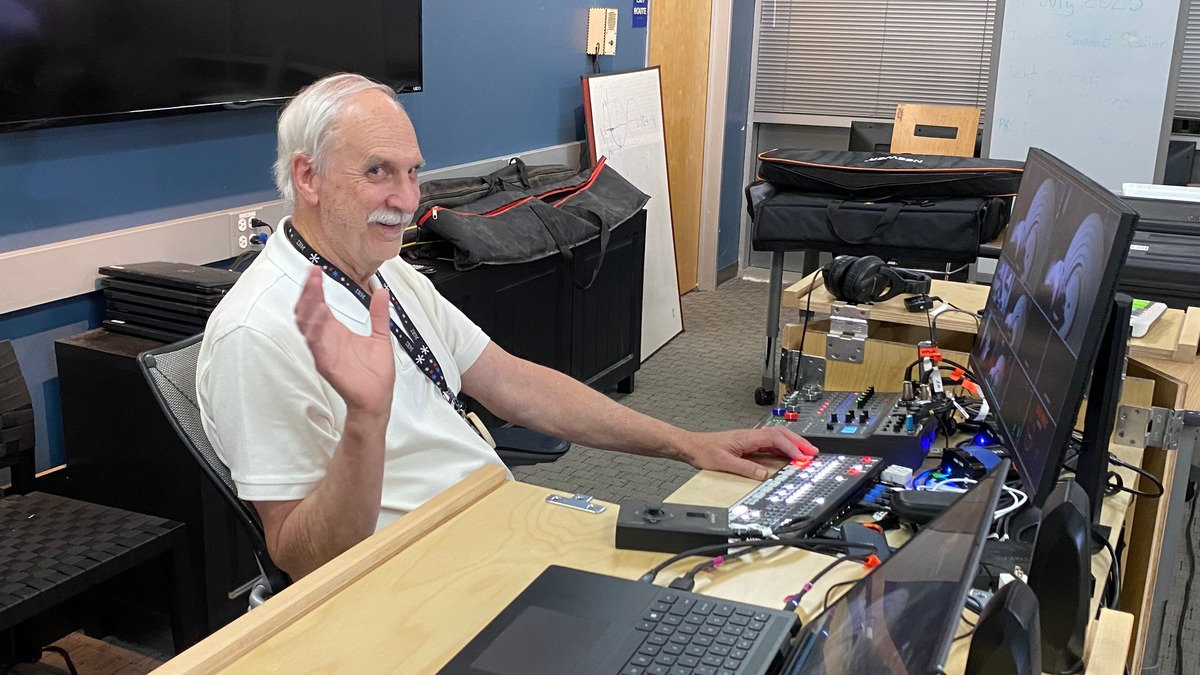
Mark Koenig, a member of the Silicon Valley Woodturners, managed the audio and video support. Mark switched between the cameras to provide the best views on the monitors and also coordinated the Zoom stream for those joining remotely.
Dozens of Little Trees
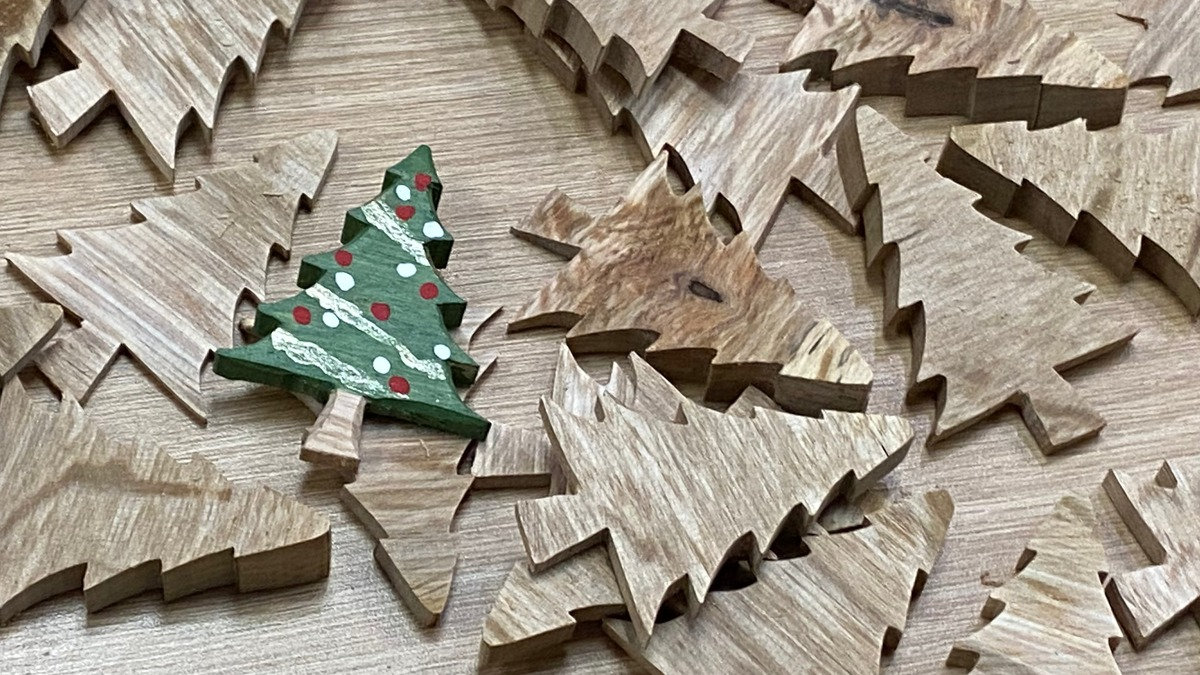
From a single turned ring, John produced dozens of identical little trees.
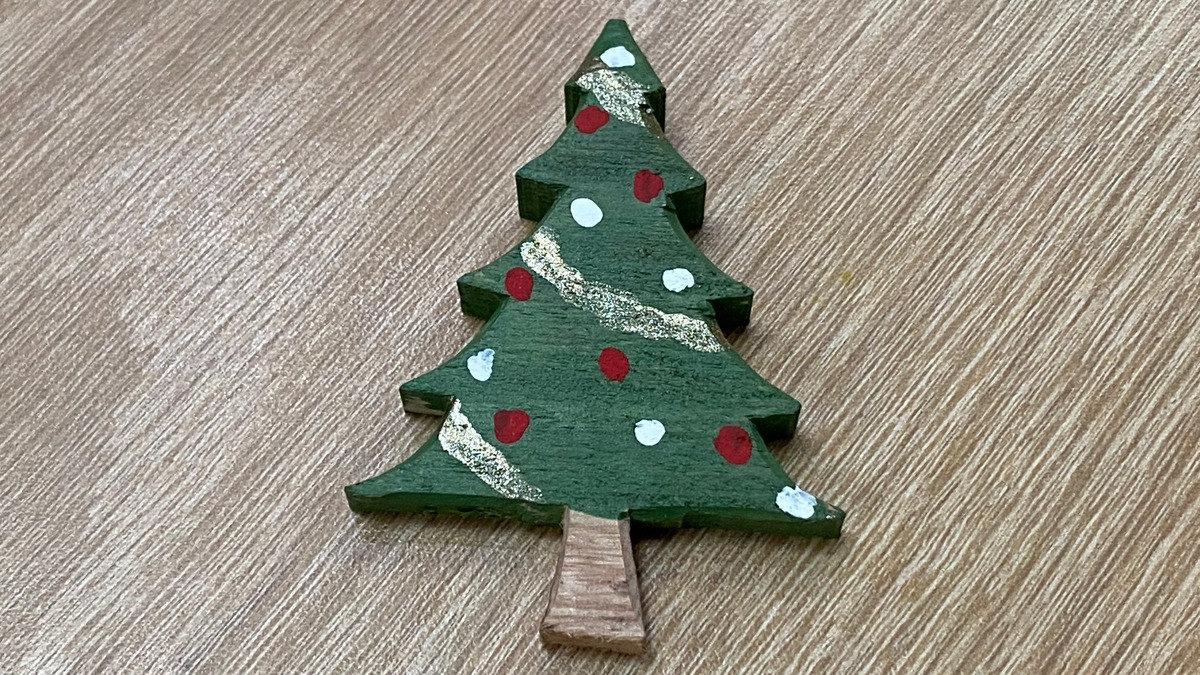
John brought along one hand-painted tree as an example of what the finished ornaments can look like. The rest of the trees came off the bandsaw as plain, natural wood. By the end of the evening, dozens of these slices were on the table, and John kindly offered them to the attendees as keepsakes of the demonstration.
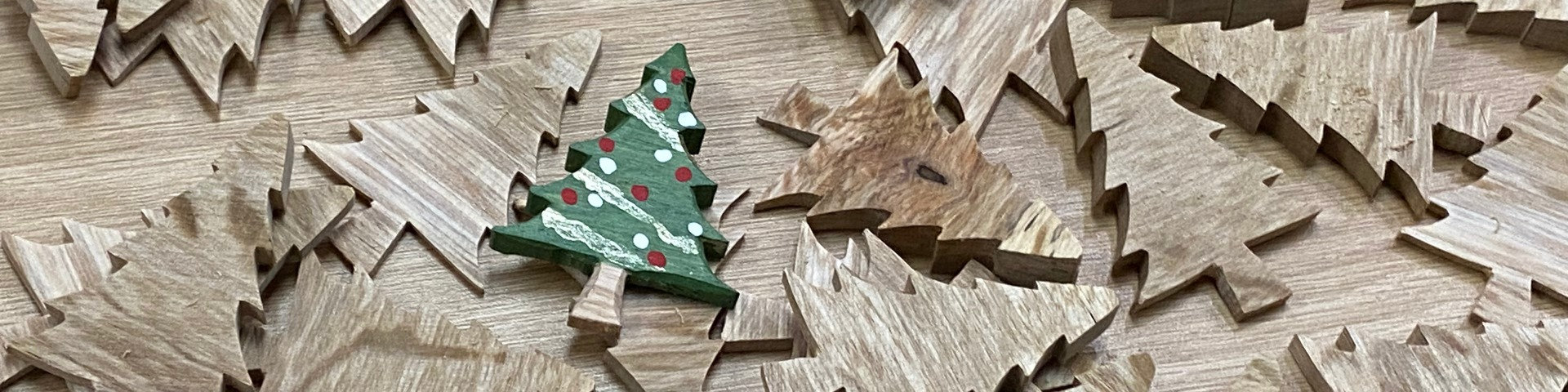
You can explore more of John’s impressive turning and carving in his photo galleries at wellsturned.com. For those interested in seeing more examples of the German ring technique, we highly recommend the work of Simon Beggs at simonbeggswoodturning.com.
Our sincere thanks to the Silicon Valley Woodturners for organizing the demonstration, and to Maker Nexus for hosting the club and providing storage for their lathe and turning tools.
Leave a Reply