A Day of Links and Learning at our Chain Carving Workshop
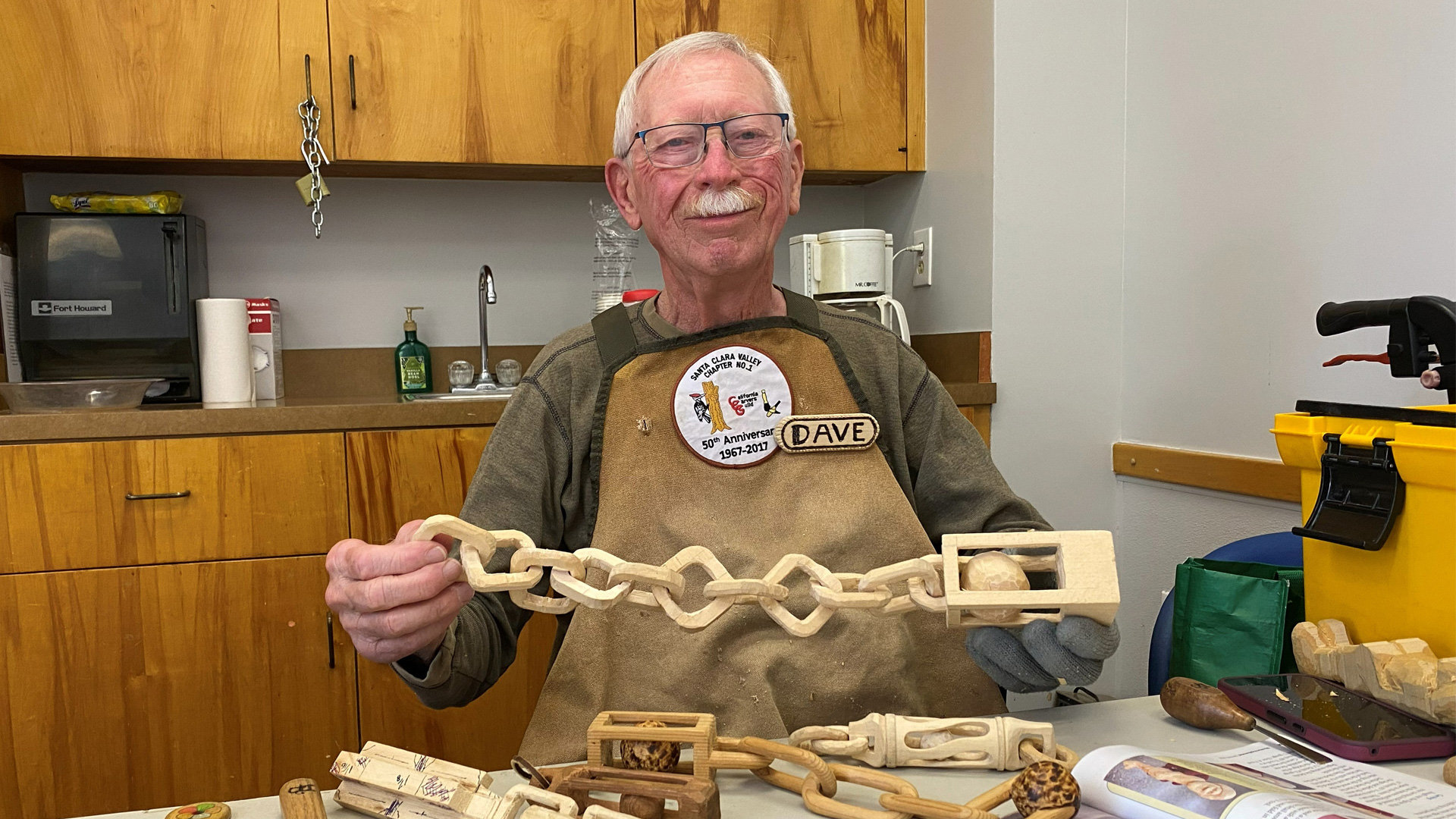
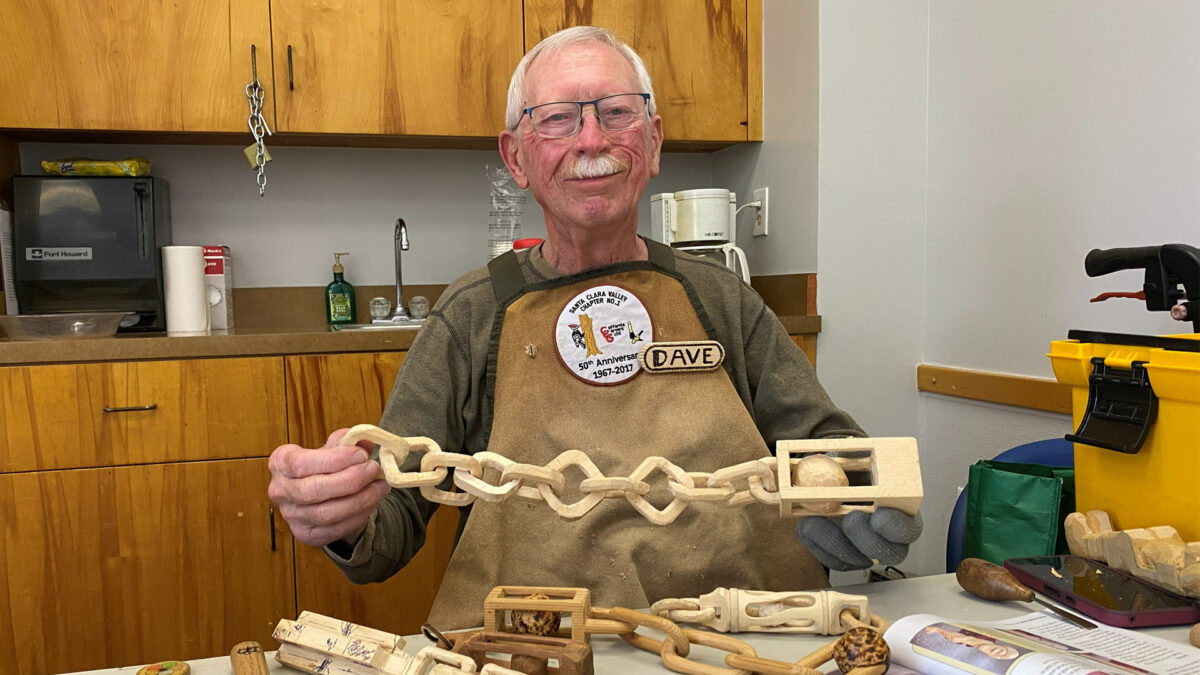
In mid-March, our carving club hosted a workshop focused on chain carving. Under the guidance of David Osterlund, members of the Santa Clara Valley Carvers carved a complete wooden chain from a single block of wood. Our chain carving workshop was very popular among the members, giving them the opportunity to use other tools, such as a drill and a scroll saw.
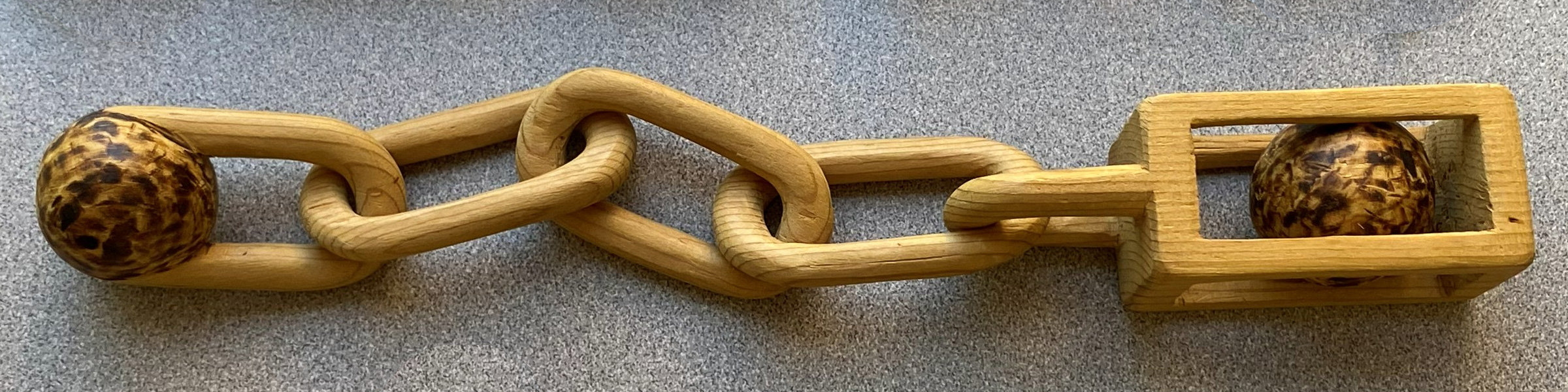
David instructed beginners on the geometry of a link, while experienced carvers refined tighter tolerances or added the optional ball‑in‑a‑cage detail. The objective was to transform a solid blank into a continuous series of links, requiring steady hands and attention to grain direction.
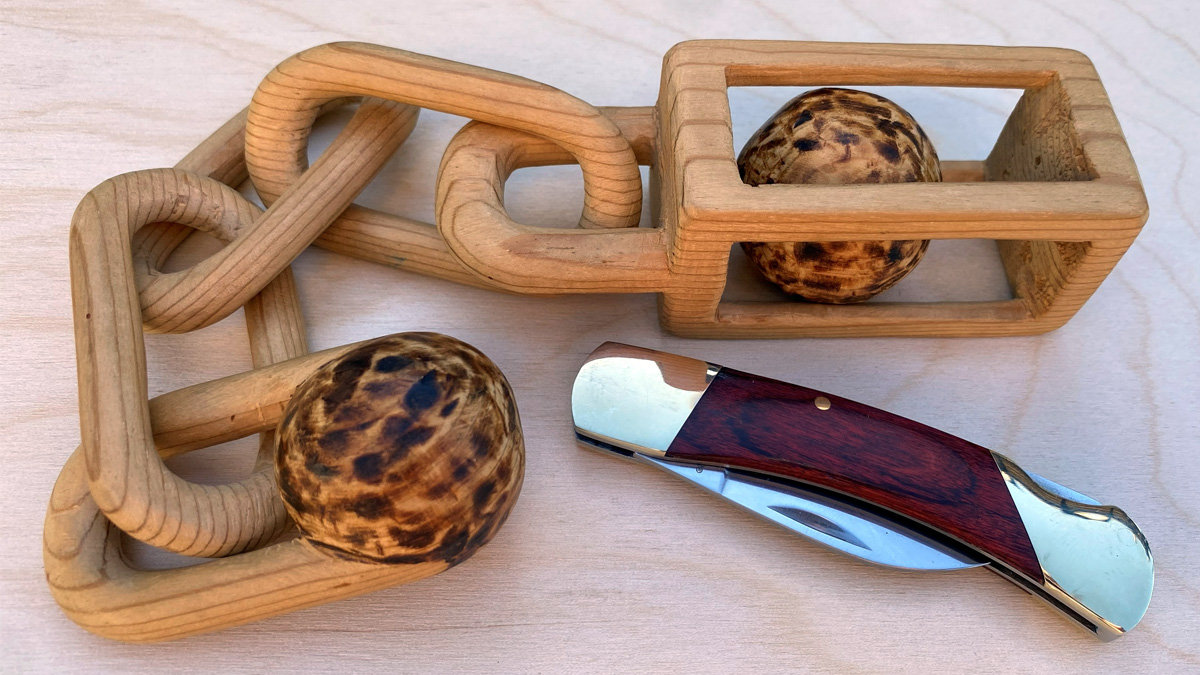
Preparation & Materials for our Chain Carving Workshop
The workshop was free for members, with 20 attendees ranging from first‑timers to long‑time veterans. The room reflected a collaborative environment; members frequently checked link symmetry, discussed grain flow, and assisted one another with difficult cuts.
Workshop leader Dan Brady prepped the stock in advance by using his table saw to cut each blank into a cross‑shaped “starter” shape, shaving off most of the material, so every participant could focus on the whittling itself.
Participants received:
- A pre‑shaped basswood blank
- A six‑page instruction sheet covering pattern transferring, roughing, and carving
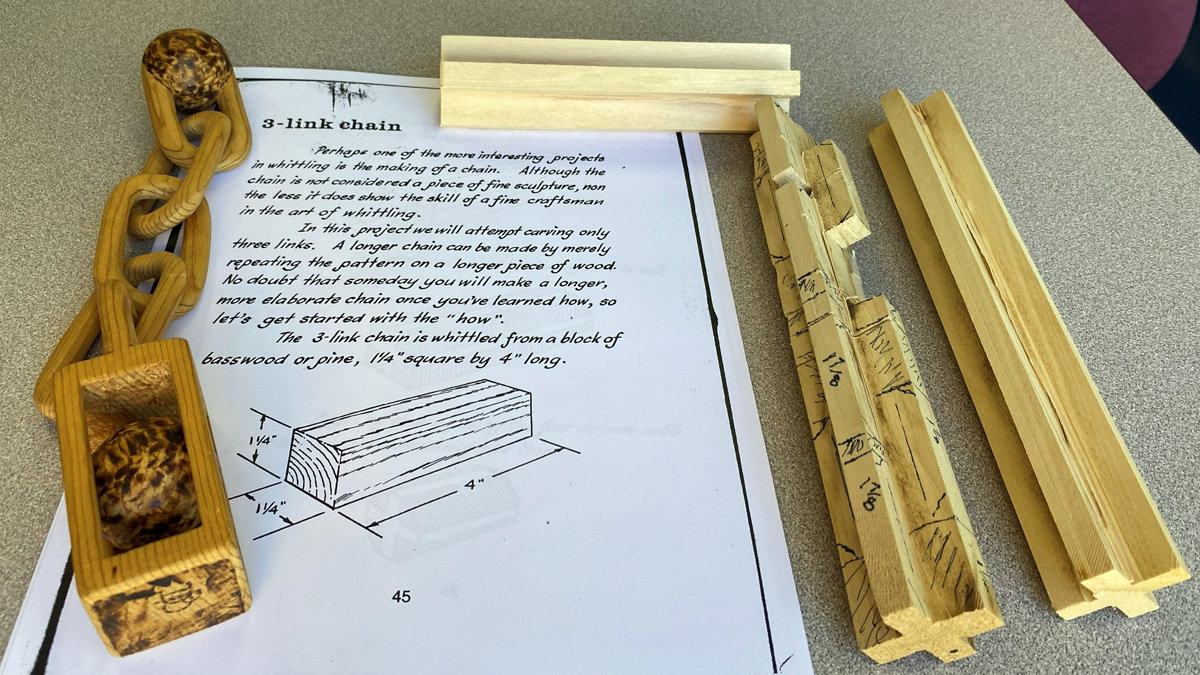
Technique Insight: Layout
A key lesson involved the initial marking process. Accurately mapping the link pattern is critical. Participants learned that leaving deliberate gaps between marked links provides the necessary clearance for the knife blade. Those gaps and careful layout make it significantly easier to separate the links.
Outcomes & Persistence
Not every project meets expectations perfectly. Sometimes wood breaks, and a block intended for carving becomes firewood or mulch.
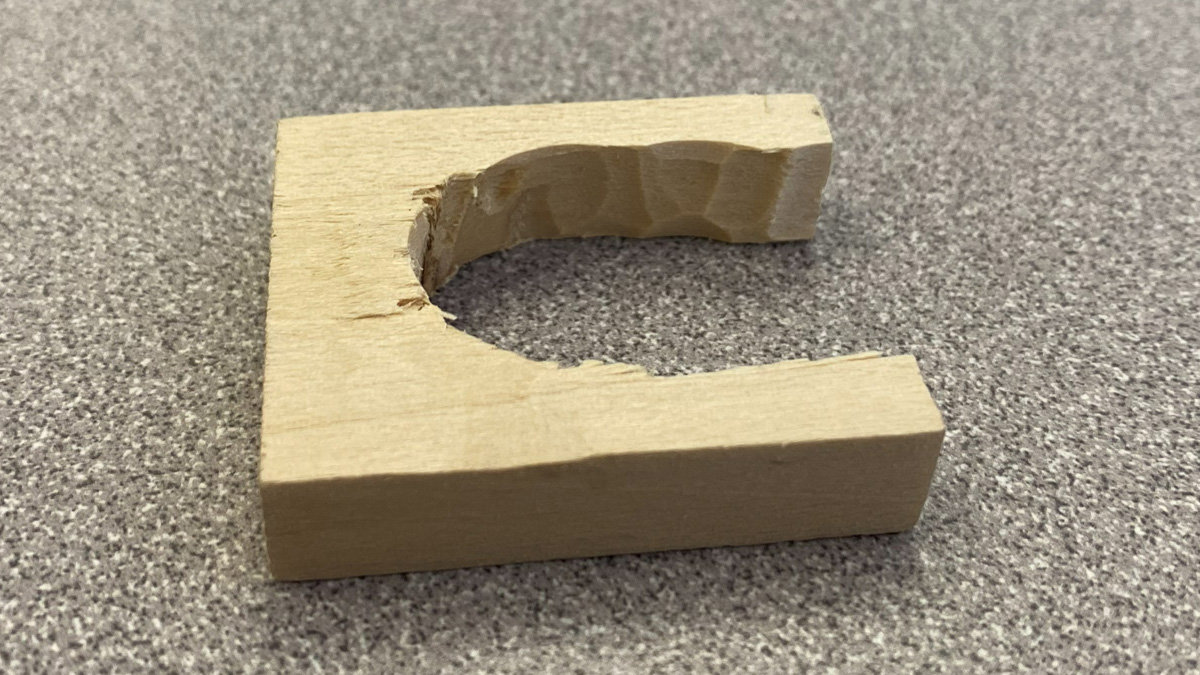
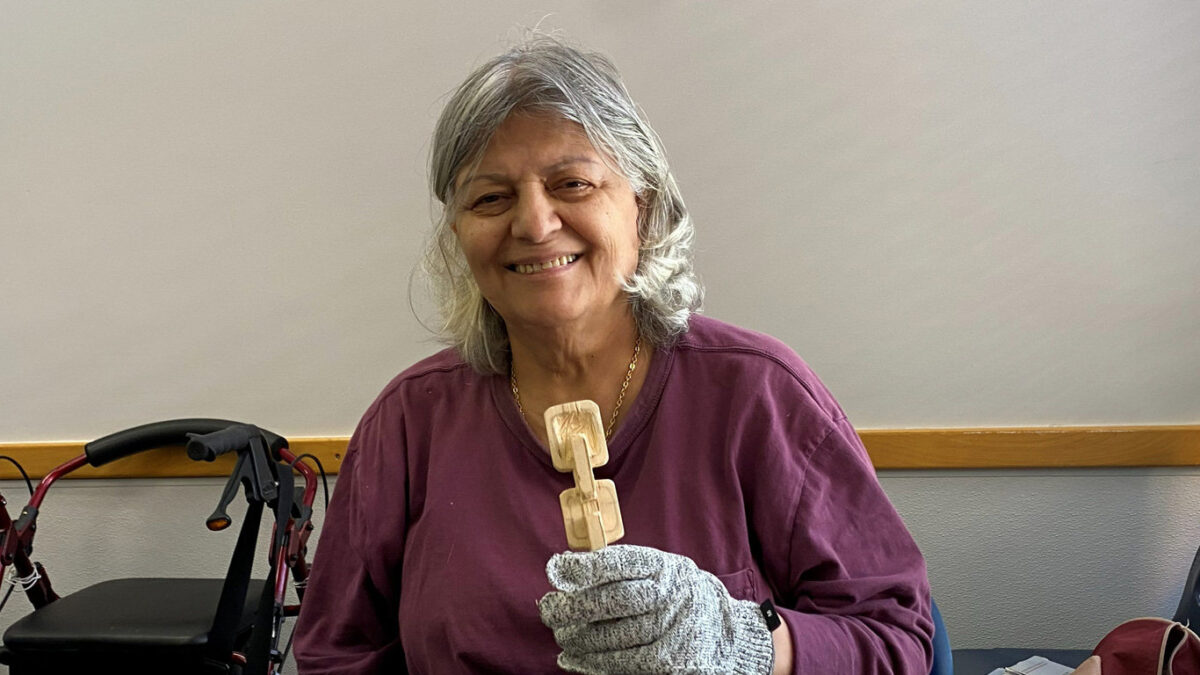
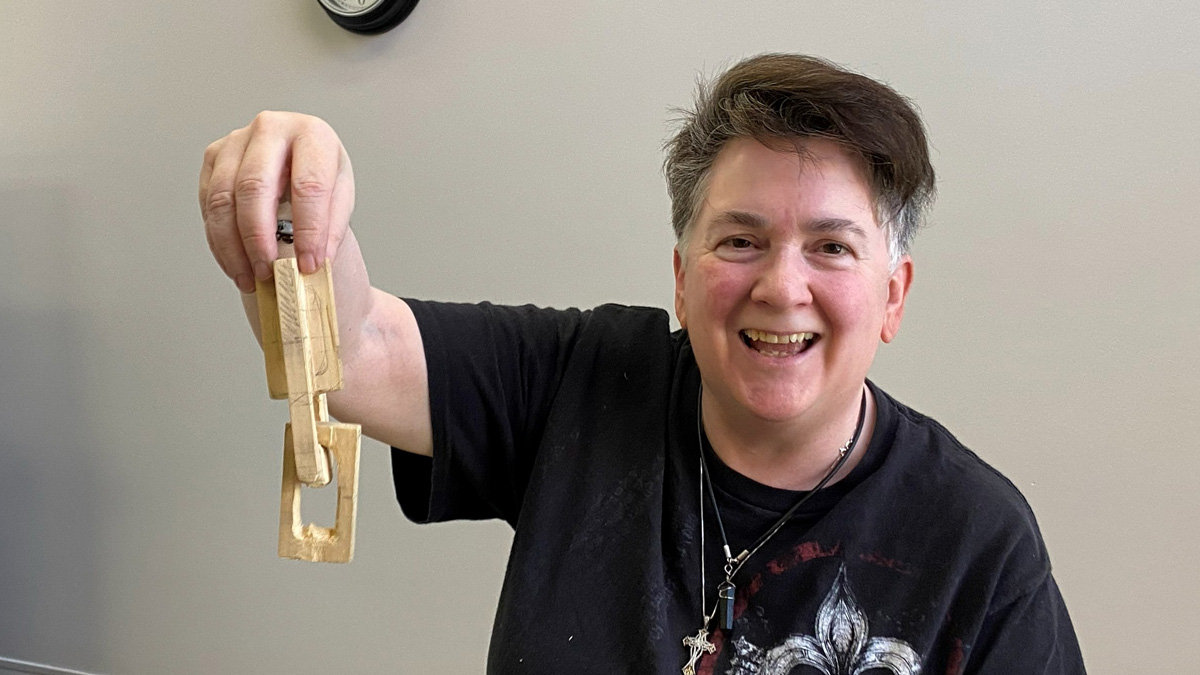
For example, Connie carved the chain link by link. When a link snapped, she continued with the next… and finished the session with half a link remaining. While the result was humorous, her persistence highlighted an essential part of the learning process.
On Display
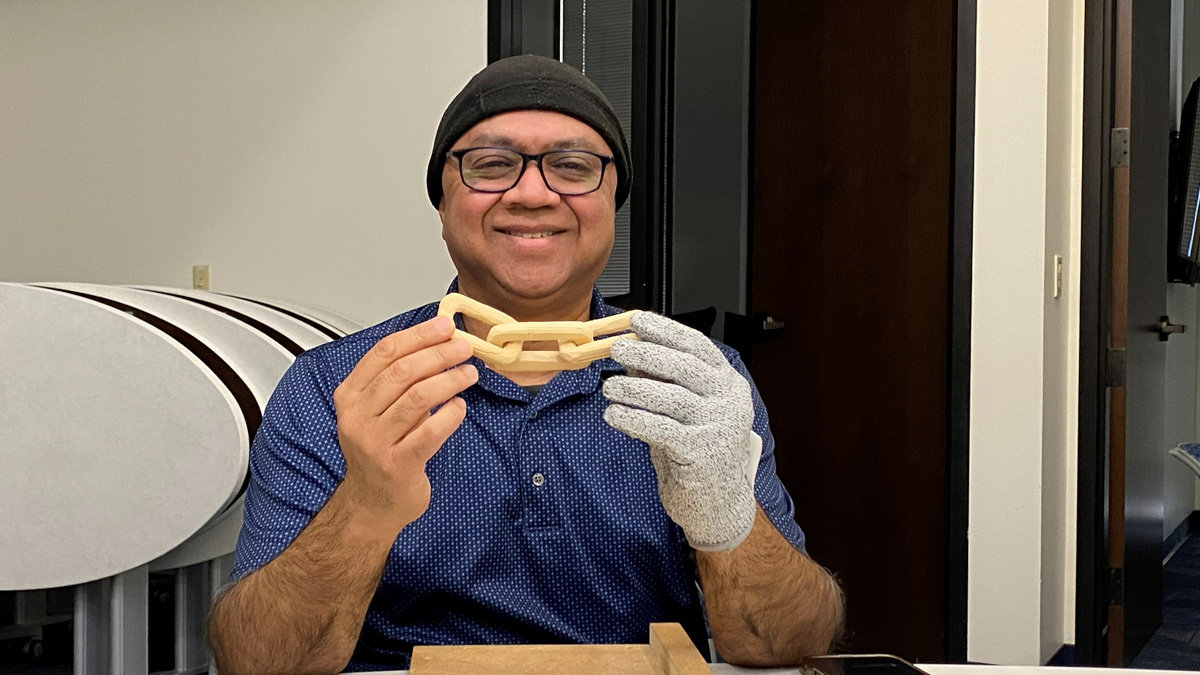
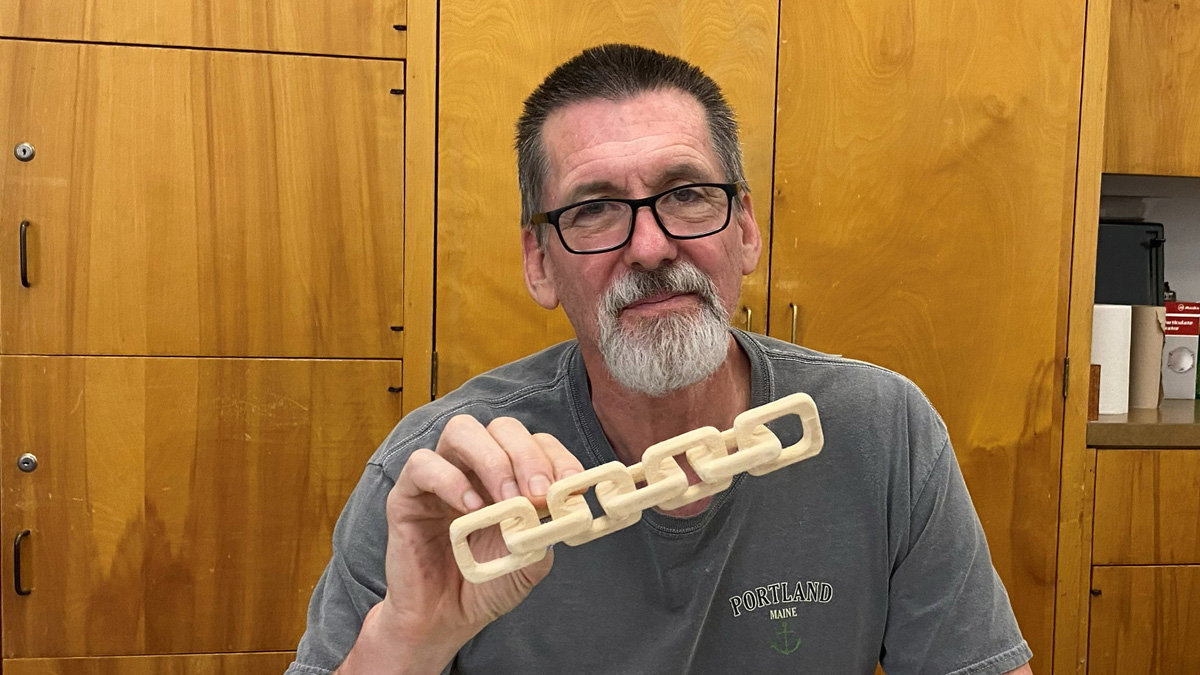
Completed chains and works in progress were displayed in the Adult Recreation Center lobby from April to March 2026. Visitors can see the transformation from a solid block to a linked chain.
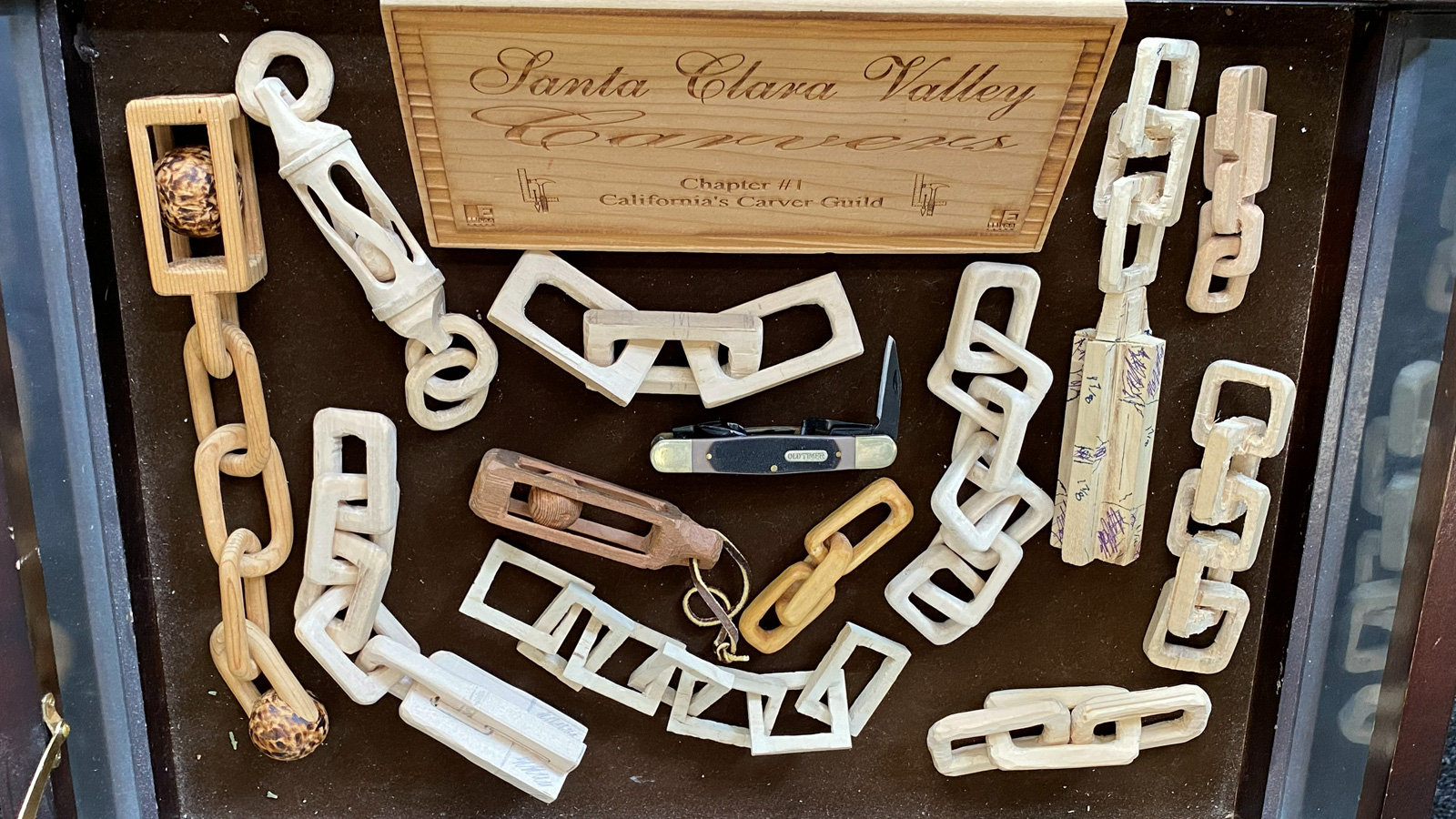
Gallery Highlights
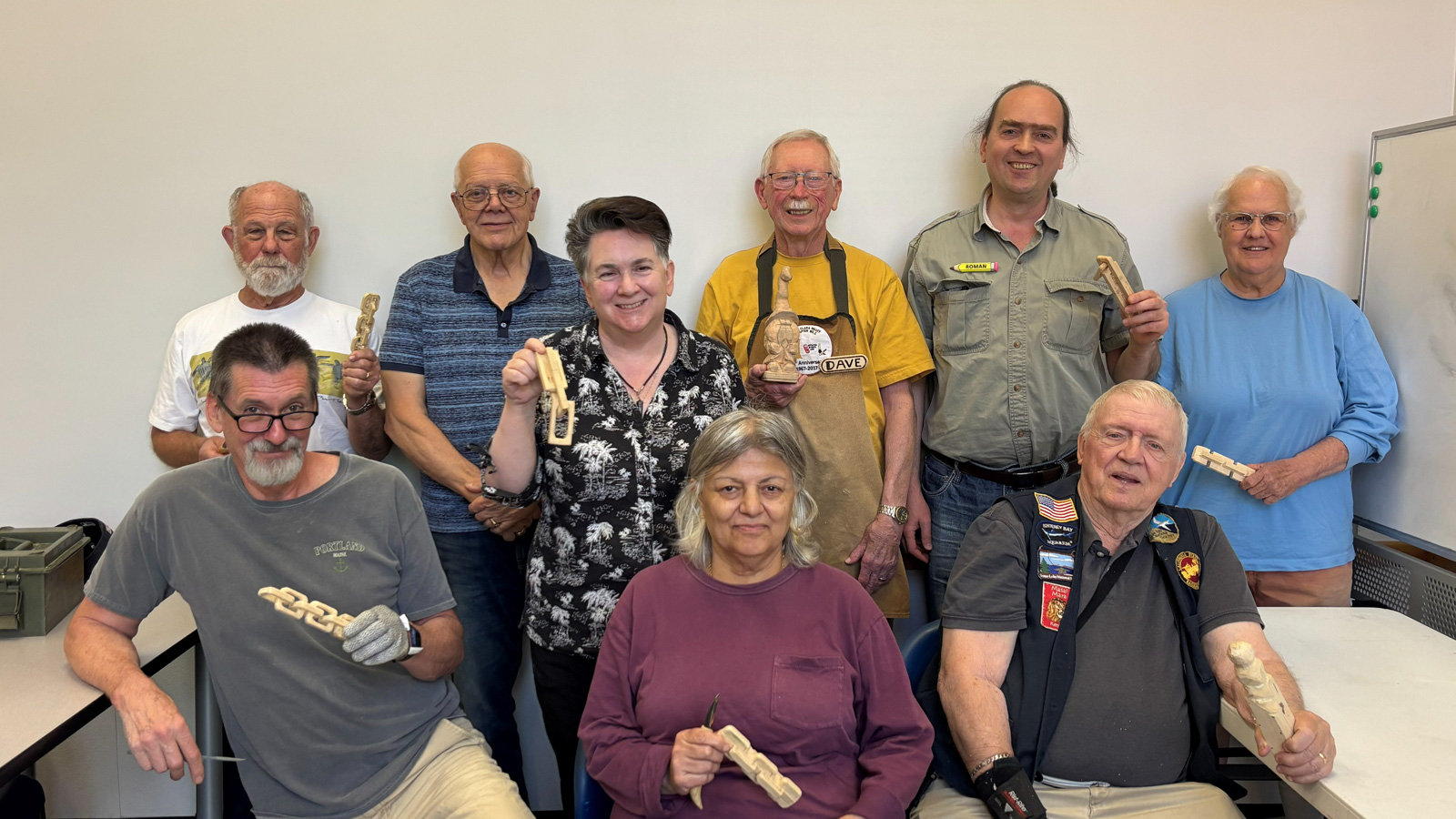
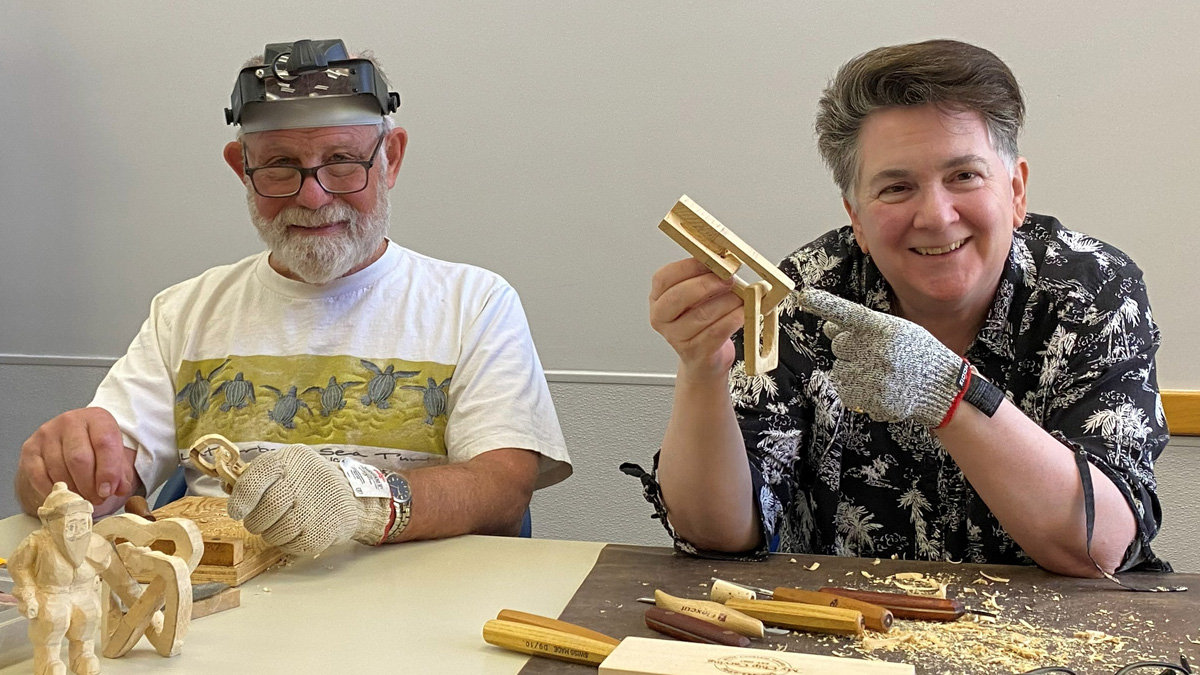
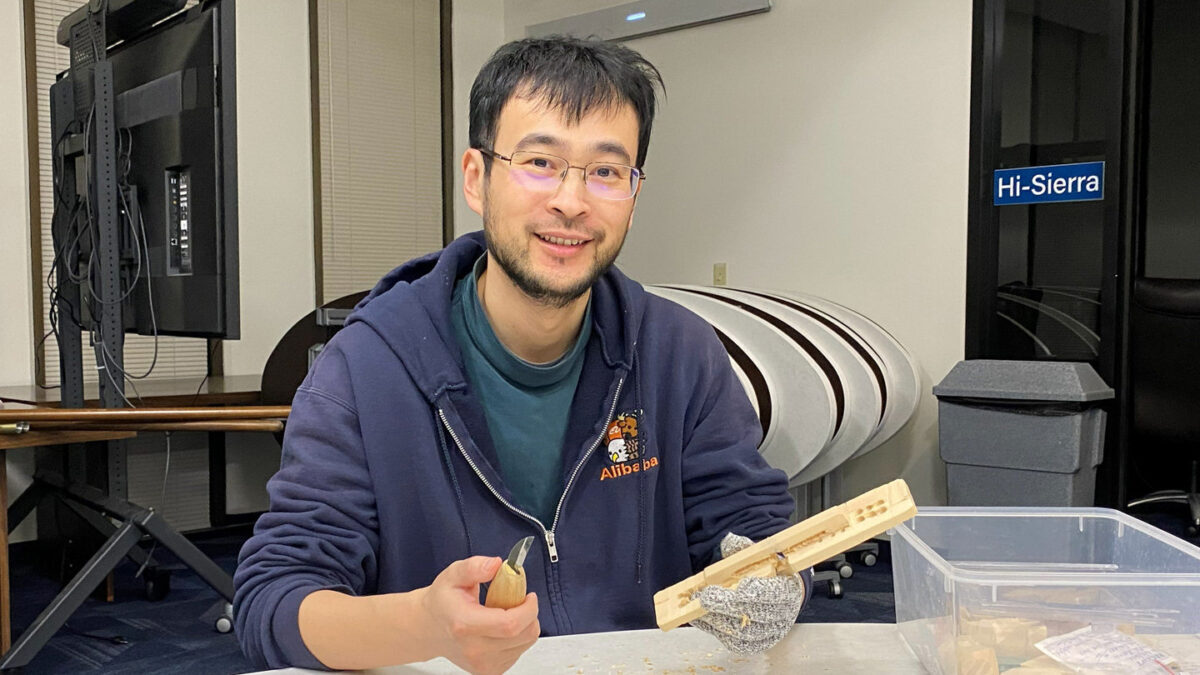
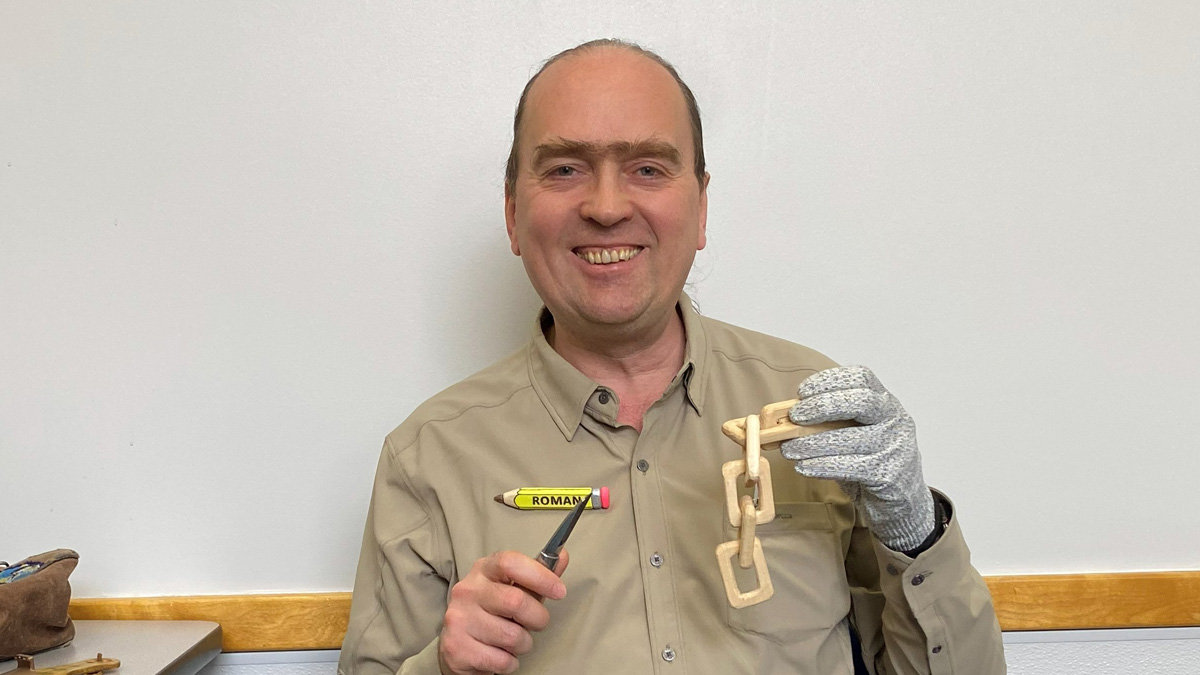
Group Progress: Group portrait of Santa Clara Valley Carvers holding partially finished chains, showing the range of progress.
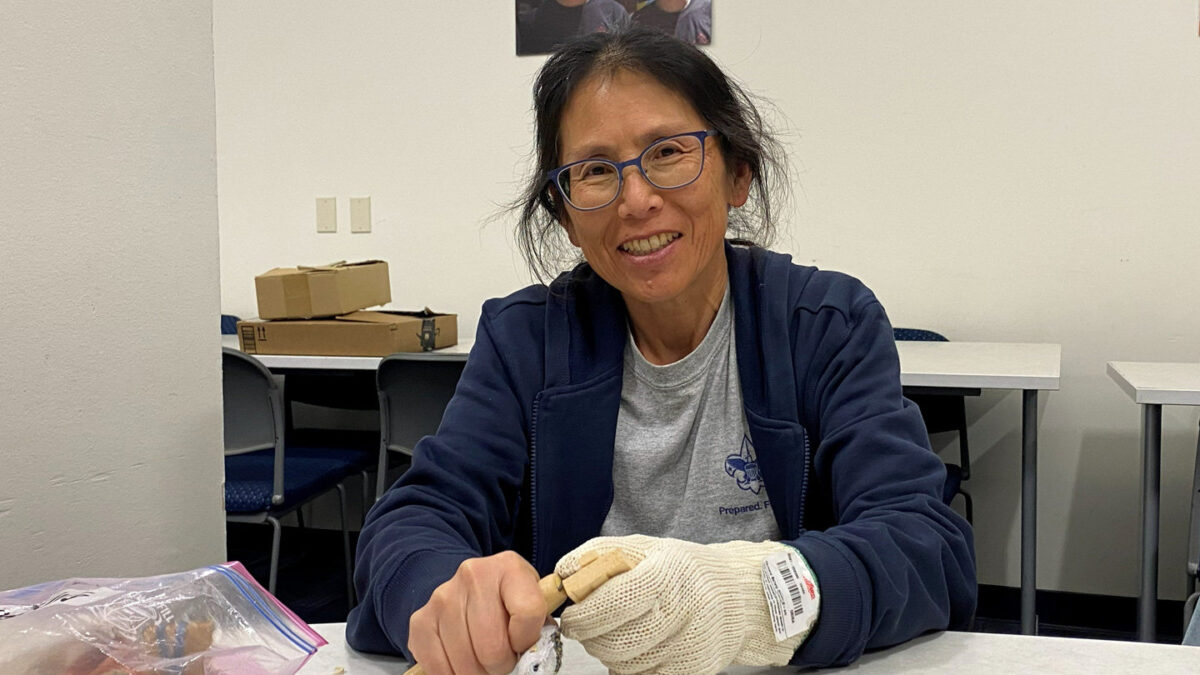
Collaboration: Members leaning over each other’s work, offering advice on grain flow and link symmetry. The day reminded us that while each piece is carved alone, the learning happens together.
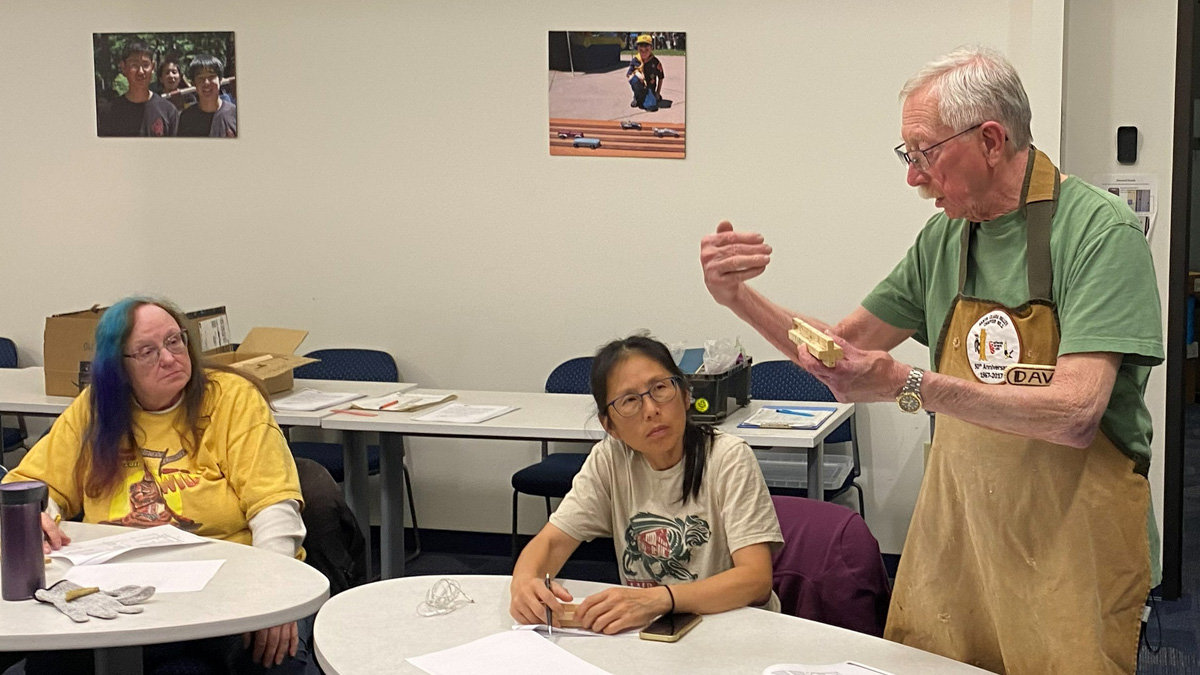
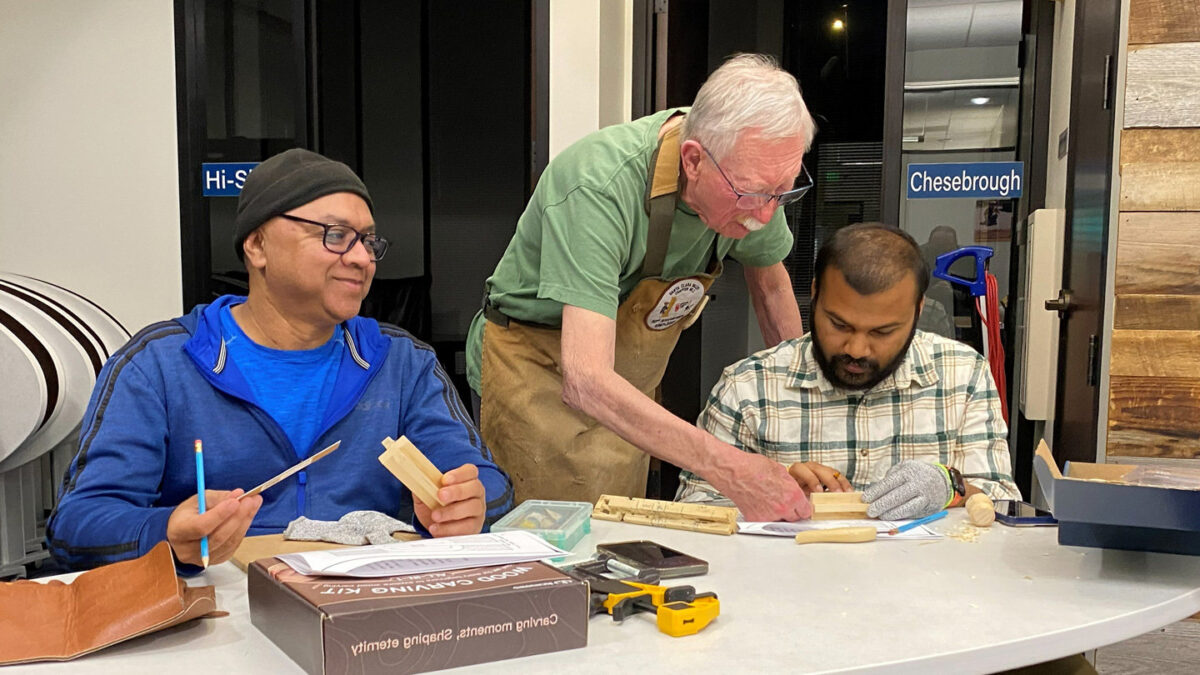
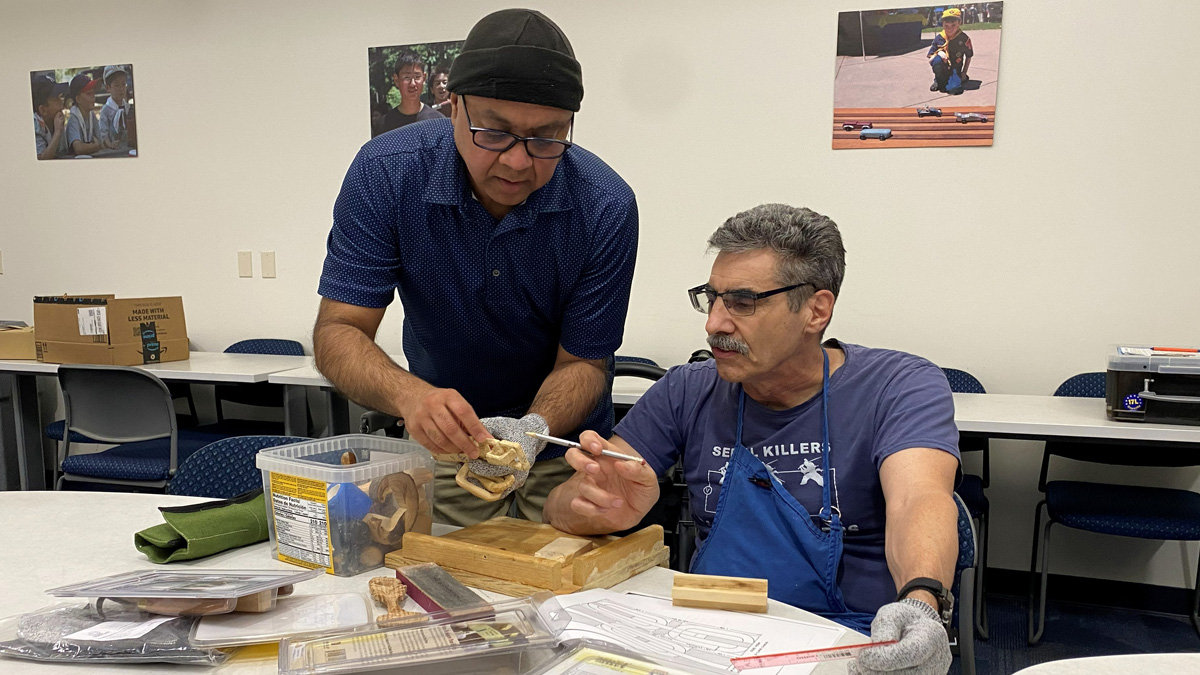
Detail Work: An individual carving the final cut of the first link; patience is the only tool needed.
Carving Tip for Chain Carving Workshop
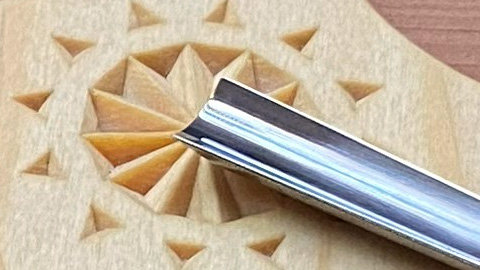
Make a DIY mini‑saw by mounting a scrollsaw blade in a dowel. The compact tool reaches tight spots, perfect for carving small wooden chains. This tool is about 9 inches long.

Thank you to everyone who whittled, shared, and helped make this woodcarving workshop a success. We look forward to the next challenge. Review our calendar for upcoming dates and project ideas.
Leave a Reply